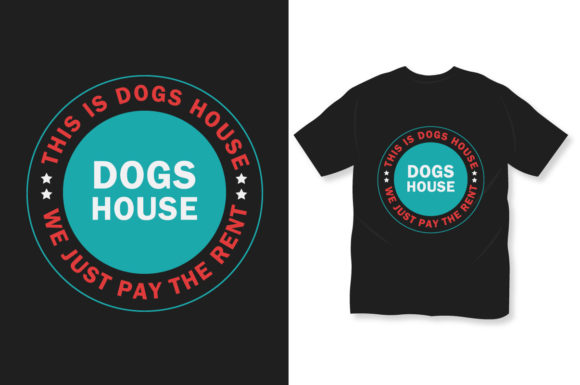
Dog T-shirt This is Dog House
A Designer’s First Look: Playful, Clear, and Built for Real Stitching
When I opened Dog T-shirt This is Dog House for the first time, my eye went straight to the balance — not just of shapes, but of intention. It’s got that warm, friendly vibe you want in a handmade item: a stylized doghouse front with clean outlines, friendly proportions, and just enough detail to feel intentional without overloading the stitch count. No fussy gradients or micro-details — this is clearly designed as a machine embroidery design meant to translate well across fabrics and hoop sizes. As someone who’s stitched hundreds of custom orders for baby onesies, boutique tote bags, and Etsy shop merchandise, I immediately pictured it on a soft cotton apron for a local pet bakery — cheerful, legible at a glance, and unmistakably handmade.
Where It Shines: Real Projects That Feel Thoughtful
Dog T-shirt This is Dog House works especially well when authenticity matters more than flash. I tested it (on scrap fabric first — always) for a small-batch run of linen tea towels for a craft fair booth. The layout sat comfortably centered on a 4×4 hoop, and the lettering held up beautifully in satin stitch — crisp, rounded, and readable even at 3.5 inches wide. It also translated cleanly onto a lightweight sweatshirt using medium-weight cutaway stabilizer. No puckering, no thread breaks. For personalized gifts, like a birthday pillow cover for a dog lover, it added instant charm without looking generic. And because the design leans into simplicity rather than complexity, it reads well on dark fabric — especially when paired with high-contrast thread colors like white or butter yellow.
This isn’t just a print template repurposed for stitching. It behaves like a proper digital embroidery file: balanced fill stitch areas, logical stitch direction, and spacing between elements that prevents nesting issues. That makes it reliable for commercial embroidery workflows — think small shop merchandise, holiday embroidery bundles, or even embroidered patches for a local shelter fundraiser.
Where to Pause — Not Flaws, Just Smart Adjustments
Like any solid graphics-based embroidery asset, Dog T-shirt This is Dog House has natural boundaries. It’s not ideal for ultra-small hoops (under 3 inches), especially if you’re planning to add names or dates nearby — the doghouse itself takes visual priority, and crowding it risks muddying the message. On highly textured fabrics — think bouclé knit or heavy burlap — some of the finer line work may soften slightly. And while the lettering is clear, it’s not built for sub-2-inch scaling; tiny caps or curved surfaces like baseball caps need extra testing for legibility.
I’d also recommend reviewing stitch density before running on thin or stretchy fabric. It’s moderate, not heavy — but if you’re stitching on jersey or baby rib, a tear-away + light cutaway combo gives cleaner results than stabilizer alone. And yes — test on scrap first. Always. Especially if you’re pairing it with other design assets in a printable mockup or layered custom apparel collection.
What It Adds to Your Handmade Product — Beyond Aesthetics
There’s a quiet confidence in using a design like Dog T-shirt This is Dog House. It doesn’t shout. It invites. That tone carries through to customer trust — whether you’re an Etsy seller listing embroidered baby onesies or a craft business owner curating a spring collection of pet-themed kitchen towels. Buyers respond to clarity and warmth, not clutter. This design delivers both.
It supports brand consistency without demanding rigid rules — swap thread colors to match your palette, pair it with minimalist fonts for a cohesive look, or use it solo for maximum impact. As a finished product, it feels intentional, not mass-produced. That handmade presentation? It starts here — with thoughtful design choices, not just careful stitching.
Practical Notes Every Embroidery Designer Should Keep Handy
- Always test Dog T-shirt This is Dog House on scrap fabric matching your final project’s weight and stretch.
- Check thread color contrast — especially on dark or heathered fabrics. What reads well on screen may fade in stitch.
- Review the full design in black-and-white mockups. If it holds up there, it’ll hold up anywhere.
- Confirm hoop size compatibility before digitizing or resizing — some versions may assume standard 4×4 or 5×7 parameters.
- Inspect small corners and letter junctions. Even simple designs can hide tight angles that snag on dense stabilizer.
- Use appropriate stabilizer — medium cutaway for knits, tear-away for stable wovens, and avoid heat-away unless you’ve verified thread adhesion.
- If selling finished items or digital products, verify licensing terms directly with the seller. “High quality and trendy” doesn’t automatically mean commercial-use clear.
The Bottom Line for Craft Business Owners and Makers
Dog T-shirt This is Dog House isn’t flashy — and that’s its strength. It’s a grounded, versatile embroidery project starter that fits naturally into real-life making: baby embroidery, holiday embroidery, boutique branding, craft fair products, and personalized gifts that land with sincerity. It respects the craft — no over-engineered fills, no fragile details, no assumptions about your machine or skill level. Just a clean, friendly, stitch-ready idea waiting to become something tangible.
Whether you’re building a catalog of design assets for your Etsy shop or stitching one-of-a-kind pieces for friends and clients, this design earns its place by performing quietly, consistently, and well. That’s not easy to find — and it’s exactly why I keep it in my go-to folder for small shop product development.