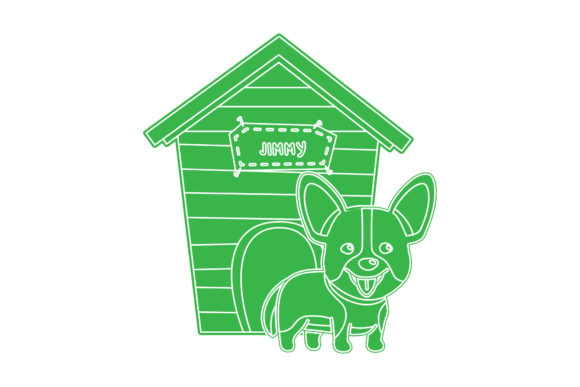
Dog with His House Green Icon
A Quiet, Friendly Vibe—Not Too Cutesy, Not Too Minimal
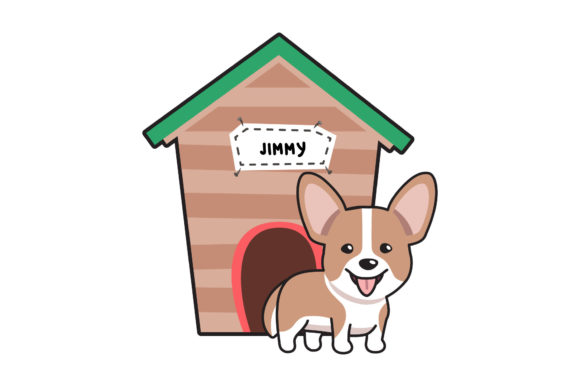
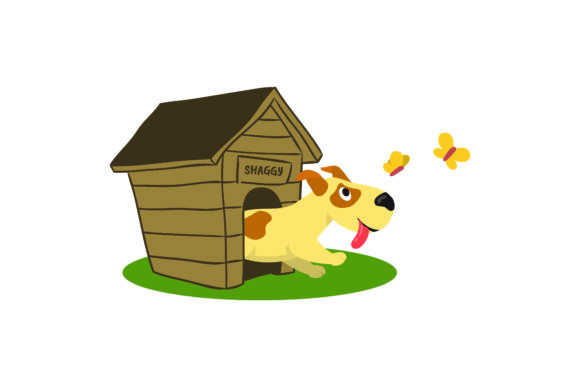
First glance at Dog with His House Green Icon feels like spotting a well-loved garden sticker: simple outline, gentle curves, and that soft green tone suggesting calm, care, and quiet companionship. It’s not a cartoon dog jumping mid-air or wearing sunglasses—it’s grounded, centered, and just slightly nostalgic. The house sits snugly beside the dog, both forms balanced on the same baseline, giving it natural stability for embroidery placement. As an illustration, it leans into warmth without overloading detail—no tiny windows to vanish in satin stitch, no whiskers that’ll blur into fill stitch noise. That makes it unusually versatile for real-world embroidery projects where clarity matters more than complexity.
Where It Shines: Tote Bags, Baby Items, and Thoughtful Gifts
I recently tested Dog with His House Green Icon as the centerpiece for a custom embroidered canvas tote—meant for a local pet-friendly café’s small-batch holiday collection. Stitched at 3.5" wide on medium-weight cotton canvas with light tear-away stabilizer, it held up beautifully: clean edges, readable shape, and enough breathing room between elements to avoid thread crowding. The same design translated cleanly onto a baby onesie (using cutaway + topping), where parents appreciated how gently it suggested “home” and “companion” without overwhelming the garment.
It’s also working well on kitchen towels and pillow covers—places where people want charm without clutter. For Etsy sellers offering personalized nursery decor, this icon pairs naturally with monogrammed initials or soft botanical borders. As a sweatshirt embroidery design, it reads clearly even at 4" tall, especially when paired with tonal thread (forest green on olive, sage on cream). And because it’s built as a single cohesive shape—not layered or interlocked—it stitches efficiently, reducing jump threads and tension hiccups on commercial machines.
Where to Pause: Texture, Scale, and Fabric Behavior
That said, Dog with His House Green Icon isn’t magic on every surface. On highly textured fabrics like terry cloth or thick fleece, the clean silhouette can soften—especially the roofline and dog’s ear—so I recommend adding a lightweight topping or testing stitch density first. It also doesn’t scale down gracefully below 2.25": the gap between dog and house starts to close visually, and fine interior lines risk disappearing entirely in fill stitch. Avoid using it on curved surfaces like structured caps unless you’re confident in your hooping technique and have confirmed the file’s vector integrity holds through digitizing.
Dark fabric? No problem—but test thread contrast carefully. A bright kelly green may pop less than a muted moss or deep emerald. And while the design itself has no text, don’t assume it’s automatically safe for layered garments (like reversible aprons) without checking stitch height and backing thickness. If you're planning an embroidered patch, confirm whether the original file includes underlay or pull compensation—those details aren’t listed in the product specs, so verify before digitizing.
Design Assets That Support Your Craft Business
What makes Dog with His House Green Icon useful beyond one project is its format flexibility: AI, EPS, SVG, and DXF files mean you can adapt it across platforms—whether you’re prepping a printable mockup for your Etsy listing, building a digital embroidery file library, or resizing for a client’s custom apparel order. The 1920px × 1280px canvas gives plenty of headroom for scaling without pixelation, and as a Graphics asset, it respects clean vector logic—no embedded rasters or hidden layers muddying your workflow.
For craft business owners, this icon supports brand consistency without demanding heavy customization. Use it as a subtle tag on packaging, a repeating motif on tea towel sets, or a quiet signature on holiday gift tags. Customers respond to its sincerity—it feels handmade, not mass-produced—even though it’s a digital embroidery file. That authenticity builds trust, especially for personalized gifts and boutique products where emotional resonance matters as much as execution.
Practical Designer Notes Before You Stitch
- Always test on scrap fabric first—especially if pairing with stretchy knits or delicate weaves.
- Check thread color contrast on both light and dark backgrounds; green tones shift dramatically depending on base fabric.
- Review stitch density in your embroidery software—some auto-digitized versions of similar icons run too dense for breathable fabrics.
- Confirm hoop size compatibility; while the design fits comfortably in a 4×4 hoop, double-check spacing if combining with other elements.
- Inspect small corners and curves—the dog’s tail and house chimney are subtle but critical to the design’s personality.
- Test black-and-white mockups to ensure legibility when color options are limited.
- Use proper stabilizer: light cutaway for knits, tear-away for stable wovens, topping for napped fabrics.
- Verify licensing terms before selling finished products or bundling the file in digital product kits—this isn’t stated in the listing, so don’t assume.
Final Thought: A Design That Earns Its Place
Dog with His House Green Icon won’t shout across a craft fair table—but it will earn repeat orders from customers who value intention over intensity. It works because it’s thoughtfully restrained: clear enough for machine embroidery design accuracy, warm enough for handmade product appeal, and flexible enough for small shop owners juggling custom apparel, holiday embroidery, and digital product previews. Whether you’re stitching a single personalized gift or building a cohesive line of nursery decor, this icon doesn’t distract—it anchors. And in embroidery, where every stitch carries weight, that kind of quiet confidence is rare, and valuable.