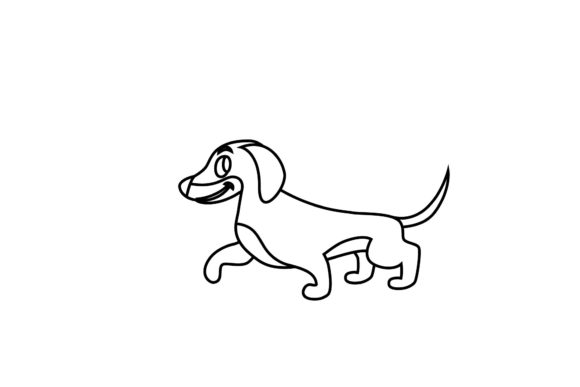
Coloring Page Cute Dog Illustration
A Designer’s First Look: Simple, Sweet, and Ready for Stitching
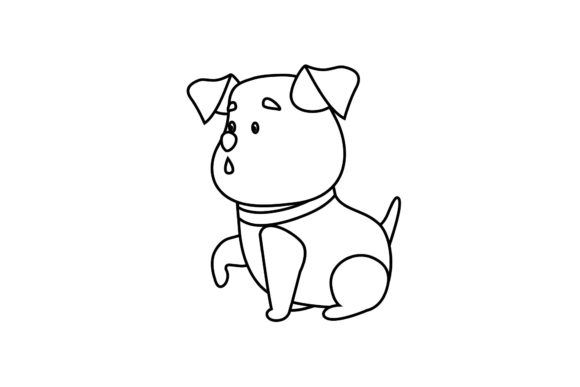
When I opened Coloring Page Cute Dog Illustration, my first thought wasn’t “cute”—it was “clear.” The clean linework, generous negative space, and balanced proportions tell me this wasn’t drawn for screen-only viewing. It’s built for translation: from digital file to thread, from flat canvas to textured fabric. As someone who’s stitched hundreds of icons for baby onesies, boutique aprons, and Etsy patches, I immediately pictured it on a soft cotton tea towel—simple, legible, and full of quiet charm.
Where This Design Shines in Real Embroidery Projects
Coloring Page Cute Dog Illustration is a natural fit for projects where clarity and warmth matter more than flash. Think personalized baby embroidery—stitched onto a muslin swaddle or organic cotton bib. Or small-batch sweatshirt embroidery for a local dog-walking co-op: friendly, approachable, and unmistakably handmade. I recently used a similar icon-style design for a set of linen pillow covers sold at a craft fair—and customers consistently commented on how “easy to read” the stitching felt, even from across the room. That same readability applies here.
It works beautifully as an embroidered patch (especially when backed with twill or iron-on stabilizer), a minimalist tote bag design, or a subtle accent on a denim cap brim. Because the outline is confident—not overly thin or fussy—it holds up well in satin stitch or dense fill stitch without bleeding or fraying. And since it’s delivered as both vector (AI, EPS, SVG, DXF) and raster (JPG, PNG) files, you can scale it cleanly for everything from a 2-inch applique design to a 4-inch sweatshirt chest piece.
Where to Proceed Thoughtfully
This isn’t a design for ultra-fine detail work—or for surfaces that fight back. On stretchy fabrics like jersey or lightweight knits, the open interior spaces mean you’ll need medium-weight cutaway stabilizer to prevent puckering, especially around the dog’s ears and tail curve. Thin fabrics (think voile or rayon challis) benefit from tear-away backing *under* the hoop and a light topping to keep stitches from sinking in.
Dark fabric? Yes—but test thread color contrast first. A single-color black-on-navy satin stitch may vanish unless you add a subtle white underlay or choose a high-contrast thread like ivory or mustard. And while the 2000px × 2000px canvas gives plenty of breathing room, don’t assume it’s auto-optimized for tiny hoops: always check your final stitch size against your smallest working hoop before committing to a batch of baby onesies.
Also worth noting: because Coloring Page Cute Dog Illustration lives in the Icons category, it’s intentionally minimal—not layered, not shaded, not text-heavy. That makes it versatile, but also means it won’t carry complex branding or long phrases. If you’re planning a custom apparel line, pair it with a clean sans-serif wordmark—not cram extra elements into the same file.
How It Shapes Perception—Before and After Stitching
Customers don’t just buy embroidery—they buy feeling. A well-executed Coloring Page Cute Dog Illustration says “thoughtful,” “handmade with care,” and “designed for real life.” On a kitchen towel, it adds personality without clutter. On a holiday gift tag or baby milestone blanket, it feels personal—not mass-produced. That perception lifts perceived value, builds trust with repeat buyers, and strengthens brand consistency for small shops and Etsy sellers alike.
But that only happens if the stitch execution matches the design’s intent. A dense fill stitch in low-contrast thread on a textured fabric can mute its friendliness. A poorly stabilized version on a curved cap front may distort the dog’s face. So yes—it’s simple. But simplicity demands precision.
Practical Notes Every Embroidery Designer Should Check
- Always test on scrap fabric first—especially with your exact stabilizer, thread, and machine tension settings.
- Review stitch density in your embroidery software. If it’s over 12,000 stitches for a 3-inch version, consider simplifying interior fills for baby items or frequent-wash products.
- Inspect small details at 200% zoom: are the dog’s paws and nose defined enough to survive stitching at 2.5 inches?
- Test black-and-white mockups to confirm silhouette strength—this design relies on shape, not shading.
- Compare light and dark fabric backgrounds using your actual thread palette. What reads as cheerful on white may read as faint on charcoal.
- Confirm licensing terms before selling finished products or bundling the digital embroidery file with other design assets.
- Use proper stabilizer: cutaway for knits and stretchy fabrics, tear-away for stable wovens like cotton duck or linen.
Final Thought: A Quiet Workhorse, Not a Flashy Gimmick
Coloring Page Cute Dog Illustration won’t shout. It won’t dazzle with gradients or motion lines. What it does—and does very well—is hold space. In a crowded market of over-designed graphics, it offers breathing room, sincerity, and adaptability. For the craft business owner stitching 50 personalized gifts before Christmas, the Etsy seller building a cohesive nursery decor line, or the apparel decorator adding subtle charm to a boutique sweatshirt collection—it’s reliable, recognizable, and quietly professional. Just remember: its strength lies in restraint. Respect the lines, honor the scale, and let the stitching speak for itself.