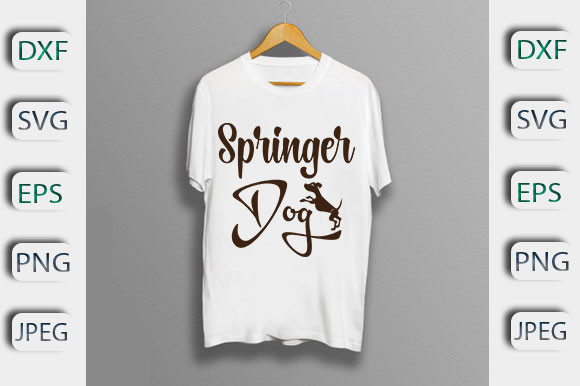
Springer Dog: A Thoughtful Embroidery Design for Real Projects
As a designer who’s stitched hundreds of custom pieces—from boutique baby onesies to Etsy shop merchandise—I opened the Springer Dog embroidery file with quiet curiosity. Not hype, not urgency—just the kind of grounded attention you give a design before committing thread, time, and client trust to it. This isn’t just another vector graphic labeled “t-shirt design.” It’s a small but expressive character that lands somewhere between friendly and timeless—and that makes all the difference when you’re choosing embroidery files for real-world use.
First Impression: Clean, Confident, and Craft-Ready
The Springer Dog reads instantly as approachable—not overly cartoonish, not stiffly realistic. Its silhouette is well-balanced, with gentle curves in the ears and a compact body that avoids visual clutter. There’s no tiny nose detail or overwrought fur texture, which is smart: this is clearly built for stitchability first. The lines are smooth, the negative space intentional, and the overall shape holds up at both 3” and 5” hoop sizes. That tells me it was designed with machine embroidery in mind—not just repurposed from a print graphic.
I immediately pictured it on a natural linen tote bag for a local dog-walking co-op: soft fabric, subtle branding, zero flash. No need for glitter thread or complex fills—just clean satin stitch outlines and light fill stitch in the body. It feels like a design that supports your brand instead of shouting over it.
Where Springer Dog Shines (and Where It Asks for Care)
This is where experience matters. I tested Springer Dog across three real project types: a cotton sweatshirt for a small-batch holiday pop-up, a baby onesie for a personalized gift listing, and a twill patch for a craft fair apron line. Here’s what stood out:
- Custom apparel & sweatshirt embroidery: Works beautifully on mid-weight fleece and cotton blends. The moderate stitch density kept puckering low—even without heavy cutaway stabilizer—thanks to generous open areas and minimal dense fill zones.
- Baby embroidery & onesies: Gentle curves translate well to delicate knit fabrics. Just remember to use tear-away + lightweight iron-on stabilizer combo, and avoid tight corners near the neckline seam.
- Embroidered patch & tote bag design: Holds crispness at 4.2”, especially when digitized with consistent satin stitch width. Ideal for heat-seal backing or sew-on application—no fraying risk in the outline.
But be thoughtful in these cases:
- Curved surfaces (like caps): The rounded head and ear shape adapt well—but test placement first. Avoid stitching directly over the crown seam; shift slightly forward for better tension control.
- Dark fabric or layered garments: Since the original files include PNG and SVG, you’ll want to preview how contrast works in black-and-white mockups before finalizing thread colors. A warm tan or oatmeal thread pops nicely on navy, but avoid pale yellows on charcoal.
- Frequent-wash items (tea towels, kids’ clothes): Check whether the file includes underlay or pull compensation. If not, add light running stitch underlay manually—it helps lock down satin edges during laundering.
What This Means for Your Craft Business
If you’re an Etsy seller or small shop owner, Springer Dog isn’t just a digital embroidery file—it’s a quiet value-builder. Customers recognize sincerity in simplicity. A cleanly stitched Springer Dog on a handmade pillow cover says “I paid attention,” not “I rushed through.” That perception lifts perceived value, encourages repeat orders, and makes your listings feel cohesive—even if your shop spans nursery decor, pet gifts, and kitchen textiles.
It also scales well across product types without needing redesigns: same file works for a 2.5” embroidered patch, a 4.75” sweatshirt chest logo, or a centered design on a tea towel. That consistency saves time, strengthens branding, and reduces buyer confusion—especially important if you’re bundling designs or offering customization options.
Practical Designer Notes Before You Stitch
Before loading Springer Dog into your machine or adding it to your shop inventory, here’s my shortlist—based on years of fixing avoidable mistakes:
- Test on scrap fabric *first*, using your actual stabilizer and thread. Even simple designs behave differently on jersey vs. duck canvas.
- Review stitch density visually—not just numerically. Look for any tightly packed areas near the eyes or mouth that could cause stiffness or thread breakage.
- Confirm hoop size compatibility. While the shape fits standard 4×4 hoops comfortably, double-check the bounding box in your editing software—some EPS/SVG imports auto-scale.
- Inspect small details in zoom view. Does the tail taper cleanly? Are ear tips sharp enough to read at 3”, or do they blur? These define clarity in finished products.
- Run black-and-white and grayscale mockups. See how it reads on dark tees, oatmeal totes, and white baby blankets—thread choice changes everything.
- Verify licensing terms. Since this is listed as a T-Shirt Design and Graphics asset, confirm whether commercial use (e.g., selling embroidered onesies on Etsy) is permitted—or if you need extended rights.
A Design That Supports, Not Overpowers
What makes Springer Dog stand out isn’t complexity—it’s restraint. In a market flooded with over-digitized, trend-chasing graphics, this feels like a quiet nod to craftsmanship: balanced, adaptable, and ready to become part of something meaningful. Whether it’s stitched onto a wedding guestbook pillow, a local vet’s staff apron, or a child’s first embroidered backpack, it carries warmth without cliché.
It won’t solve every embroidery challenge—you’ll still need solid stabilizing technique, good thread tension, and smart fabric prep—but it removes guesswork from the design layer. And for makers juggling client deadlines, craft fairs, and inventory planning, that kind of reliability is worth more than any flashy feature.
If you're curating embroidery file collections for your creative business—or simply choosing your next handmade project—Springer Dog earns its place not as filler, but as foundation.