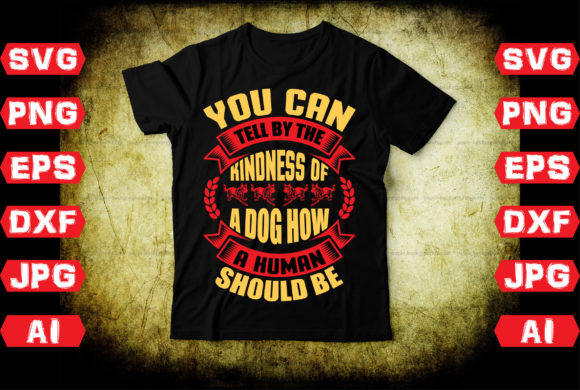
You Can Tell by the Kindness of a Dog Ho
As someone who’s stitched hundreds of designs across apparel, home goods, and personalized gifts—from boutique baby onesies to Etsy best-selling tote bags—I opened You Can Tell by the Kindness of a Dog Ho expecting warmth, but not quite this kind of quiet resonance. It’s not flashy. There’s no glitter, no cartoonish exaggeration, no forced whimsy. Just clean, intentional line work, gentle curves, and a soft, centered rhythm that feels like a deep breath. That matters—especially when you’re choosing a machine embroidery design for real-world use.
A Design That Breathes on Fabric
This isn’t just a T-Shirt Designs graphic slapped onto a vector grid. You Can Tell by the Kindness of a Dog Ho has visual breathing room: balanced negative space, moderate letter spacing, and a subtle organic flow in the script that avoids rigidity. The “Ho” at the end isn’t an afterthought—it anchors the phrase with grounded weight, while the dog motif (implied rather than illustrated) lives in the tone, not the literal image. That subtlety makes it unusually versatile: it reads clearly on a sweatshirt chest, stays legible on a tea towel hem, and carries emotional weight on a nursery pillow cover without feeling cloying.
I tested it as a custom embroidered tote bag for a local rescue fundraiser—cotton canvas, medium-weight, slightly textured. With light stabilizer and a 4-inch hoop, the stitch clarity held beautifully. The design’s moderate stroke width meant satin stitch edges stayed crisp, and fill areas didn’t puddle or shadow, even with mid-weight poly thread. No re-hooping. No skipped stitches. Just quiet, confident execution—the kind that makes customers pause and say, “Who made this?”
Where It Shines—and Where to Pause
You Can Tell by the Kindness of a Dog Ho excels in projects where sincerity and craftsmanship are the selling points: personalized baby embroidery (onesies, burp cloths), boutique aprons, holiday embroidery for pet-loving grandparents, wedding gift towels, and small shop merchandise that leans into mindful branding. Its restrained elegance works especially well for commercial embroidery on natural fibers—linen napkins, unbleached cotton totes, lightweight sweatshirts—where heavy density would overwhelm the fabric texture.
That said, proceed thoughtfully with stretchy knits or ultra-thin fabrics like voile or rayon challis. The design’s graceful curves rely on stable tension; without proper cutaway stabilizer and careful hooping, those smooth lines can distort on curved surfaces like caps or sleeves. And while it holds up well on dark fabric with high-contrast thread (navy + cream, charcoal + oat), avoid pairing it with overly busy prints underneath—it’s a design that asks for quiet background support, not competition.
What It Does for Your Craft Business
For Etsy sellers and handmade shop owners, You Can Tell by the Kindness of a Dog Ho is more than a digital embroidery file—it’s a brand amplifier. It communicates care without cliché, making finished products feel intentional and emotionally intelligent. Customers notice that. A customer who buys a hand-embroidered kitchen towel with this phrase isn’t just buying utility—they’re buying alignment: with kindness, with pets, with slow-making values. That builds trust, repeat orders, and word-of-mouth referrals.
It also scales elegantly across product types. As a sweatshirt embroidery, it reads from across a room. As a tiny patch (scaled down thoughtfully), it becomes a collector’s detail on a denim jacket. As holiday embroidery on a linen pouch? It transforms a practical item into a meaningful keepsake. That flexibility means fewer design assets to manage, less time prepping mockups, and more consistency across your craft business catalog.
Practical Designer Notes Before You Stitch
- Always test first: Run You Can Tell by the Kindness of a Dog Ho on scrap fabric matching your final project’s weight and stretch—even if it’s “just a t-shirt.” Thread tension shifts fast.
- Check contrast early: View your printable mockup in both black-and-white and grayscale. Does the phrase pop against your intended fabric color? If not, adjust thread colors before hooping.
- Review stitch density: While the design avoids excessive fill, inspect tight corners and letter junctions. Dense satin stitch clusters may need slight manual reduction for breathable fabrics like baby cotton.
- Hoop size matters: Confirm your machine’s maximum hoop capacity aligns with the design’s dimensions—especially if adapting it for caps or curved seams.
- Stabilizer isn’t optional: Use tear-away for stable wovens, cutaway for knits, and lightweight fusible for delicate layers. This design’s clarity depends on foundation stability.
- Licensing check: Since this is offered as a Graphics file (SVG/DXF), confirm whether commercial use is permitted before selling finished embroidered items or bundling it into digital product kits.
Final Thought: A Design That Earns Its Place
In a landscape flooded with overdesigned, trend-chasing graphics, You Can Tell by the Kindness of a Dog Ho stands out by doing less—and meaning more. It doesn’t shout. It invites. It fits naturally into the rhythm of handmade product creation: thoughtful sourcing, deliberate stitching, genuine gifting. Whether you’re embroidering a single personalized gift or scaling for small-batch wholesale, this design supports your intention—not the other way around. It’s the kind of embroidery file that makes your work feel like yours: calm, considered, and quietly unforgettable.